

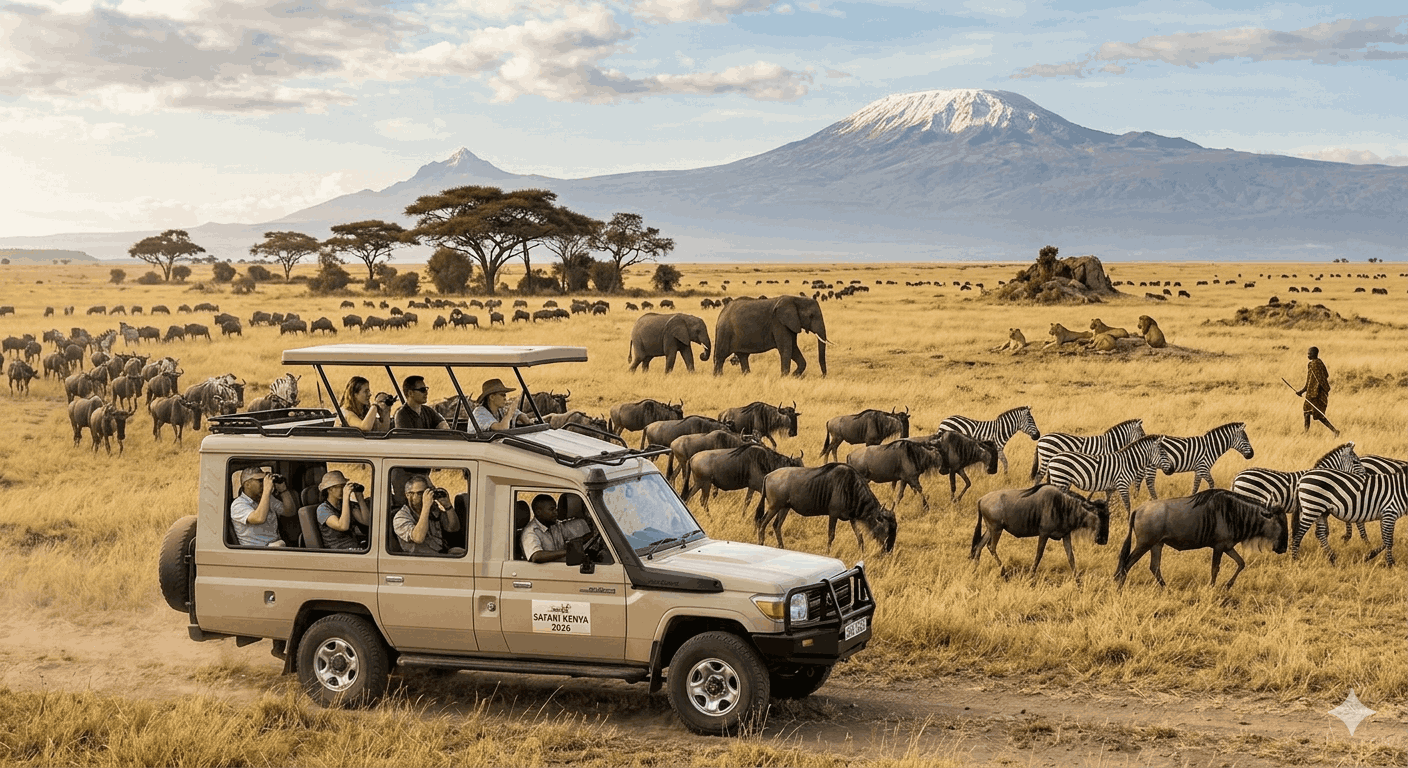
The call of the wild is a primal pull that resonates deep within the human spirit, and nowhere is this call more melodious than in the heart of East Africa. A Kenya safari is not merely a vacation; it is a transformative journey into the cradle of humanity where the rhythm of life is dictated by the rising sun and the seasonal migration of millions. From the iconic sweeping savannahs of the Maasai Mara to the snow-capped backdrop of Mount Kilimanjaro in Amboseli, Kenya offers a biological diversity that few places on Earth can match. As we move through 2026, the landscape of travel is shifting toward deeper immersion and conservation-led encounters, making this the perfect era to explore the Great Rift Valley and beyond.
The word safari itself carries a rich history. Derived from the Swahili word for journey, which in turn has roots in the Arabic word safar, the term has evolved from its 19th-century associations with grueling expeditions and hunting to a modern definition centered on wildlife observation, photography, and ecological appreciation. According to Wikipedia, the concept of the modern safari was shaped by early explorers and has since transitioned into a global industry focused on the “Big Five”: the lion, leopard, rhinoceros, elephant, and Cape buffalo. In Kenya, this industry is a cornerstone of the national identity and a vital economic engine.
Understanding the diverse ecosystems of a Kenya safari
Kenya is a land of dramatic contrasts, and understanding its various regions is the first step in planning a successful itinerary. The country is geographically divided by the Great Rift Valley, a massive geological trench that creates a variety of microclimates and habitats. This diversity ensures that whether you are looking for dense forests, arid deserts, or rolling grasslands, there is a corner of Kenya that will meet your expectations.
The Maasai Mara National Reserve and the Great Migration
The Maasai Mara is arguably the most famous wildlife sanctuary in the world. It serves as the northern extension of the Serengeti ecosystem and plays host to the Great Wildebeest Migration, a spectacle often described as one of the Seven Natural Wonders of the World. Between July and October, over 1.5 million wildebeest, accompanied by hundreds of thousands of zebras and gazelles, brave the crocodile-infested waters of the Mara River in search of greener pastures.
Even outside the migration months, the Mara remains a powerhouse for predator sightings. The high concentration of plains game supports healthy populations of lions, leopards, and cheetahs. For travelers seeking a more exclusive experience in 2026, the Mara Triangle, which is the western section of the reserve, offers managed tourism with fewer vehicle crowds and excellent road infrastructure. Recent trends reported by Google News indicate that while travel costs are rising, the demand for these high-impact, high-density wildlife areas remains resilient because they offer the most “value” in terms of guaranteed sightings.
Amboseli and the land of giants
If the Maasai Mara is defined by its predators, Amboseli National Park is defined by its giants. Situated at the foot of Mount Kilimanjaro, the highest free-standing mountain in the world, Amboseli provides a photographic backdrop that is nothing short of cinematic. The park is world-renowned for its “super tuskers,” male elephants whose ivory is so long it nearly touches the ground. There are fewer than 50 of these magnificent creatures left in Africa, and Amboseli is one of their final strongholds.
The ecosystem here is driven by underground springs from Kilimanjaro that create lush green swamps in an otherwise arid landscape. These swamps are magnets for wildlife, especially during the dry season, allowing for spectacular viewing from Observation Hill. The proximity to the Tanzania border also makes Amboseli a strategic hub for multi-country itineraries, which are becoming increasingly popular for “milestone” trips in 2026.
The rugged beauty of Tsavo and Samburu
For those who want to escape the more popular circuits, the Tsavo conservation area—comprising Tsavo East and Tsavo West—offers a vast, raw wilderness. Tsavo East is famous for its “red elephants,” which take on a rust-colored hue from dusting themselves in the park’s volcanic soil. Meanwhile, Tsavo West offers a more varied landscape of lava flows, springs, and dense bush, providing a different kind of challenge for wildlife spotting but rewarding the patient traveler with incredible scenery.
Further north lies Samburu National Reserve, a semi-arid region that is home to the “Samburu Special Five”: the reticulated giraffe, Grevy’s zebra, Somali ostrich, Beisa oryx, and the long-necked gerenuk. The landscape here is stark and beautiful, bisected by the Ewaso Ng’iro River, which serves as a lifeline for both wildlife and the local Samburu people.
The economic and conservation impact of Kenya safari tourism
A Kenya safari is more than a luxury experience; it is a critical component of the nation’s socioeconomic fabric. According to Forbes, tourism contributes significantly to Kenya’s GDP, and the country is increasingly positioning itself as a global leader in sustainable travel and renewable energy. The transition toward green energy, with nearly 90% of the country’s electricity coming from renewable sources, directly benefits the safari sector by powering eco-lodges and reducing the carbon footprint of tourism operations.
Community-led conservation models
One of the most successful trends in Kenyan conservation is the move toward community-owned conservancies. In these areas, land is leased from local Maasai or Samburu communities, and tourism revenue is used to fund schools, healthcare, and infrastructure. This model ensures that the people living alongside wildlife have a direct financial stake in its protection. When you choose a lodge within a private conservancy, you are often contributing to a system that reduces poaching and habitat loss while enjoying a more private viewing experience with fewer vehicles.
The role of the “Big Five” in the economy
The “Big Five” are the primary draw for international visitors, and their presence sustains thousands of jobs. From professional guides and trackers to camp staff and park rangers, the safari industry supports a vast network of families. Research shows that every job in the African safari sector supports approximately 8 to 10 dependents. This “trickle-down” effect means that every booking helps stabilize rural communities that might otherwise lack reliable sources of income.
Challenges and resilience in 2026
The safari industry has faced significant hurdles in recent years, including fluctuating airfares and global economic shifts. However, the market has shown remarkable resilience. Luxury travelers are increasingly opting for “slow travel,” staying longer in one location to minimize travel costs and maximize their connection to the land. There is also a growing interest in “purpose-led” travel, where guests participate in conservation activities, such as rhino ear-notching or visiting elephant orphanges, adding a layer of meaning to their holiday.
Planning your Kenya safari: Timing, logistics, and essentials
To get the most out of a Kenya safari, timing is everything. The weather patterns in East Africa generally follow two rainy seasons and two dry seasons, each offering a unique perspective on the wild.
When to visit Kenya
- June to October (The Long Dry Season): This is widely considered the best time for a safari. The vegetation is thin, making it easier to spot animals, and wildlife gathers around permanent water sources. This period also coincides with the Great Migration in the Maasai Mara.
- January to February (The Short Dry Season): Another excellent window for travel. The weather is hot and dry, and birdwatching is at its peak as migratory species from Europe and North Africa are present.
- November to December (The Short Rains): The landscape turns emerald green, and many animals give birth. It is a beautiful time for photography, though some roads can be muddy.
- March to May (The Long Rains): Many lodges offer significant discounts during this “green season.” While rain can be heavy, it usually comes in short bursts, and the lack of crowds provides a very exclusive feel.
Packing for the bush
Packing for a Kenya safari requires a balance of practicality and comfort. Because many internal flights use small bush planes with strict weight limits (usually 15kg in soft-sided bags), less is definitely more.
| Item Category | Recommended Essentials |
| Clothing | Neutral colors (khaki, tan, olive), layers for cool mornings, and a wide-brimmed hat. |
| Gear | High-quality binoculars (8×42 is standard), a camera with a telephoto lens, and a power bank. |
| Health | Insect repellent with DEET, high-SPF sunscreen, and a personal first-aid kit. |
| Documentation | E-visa (apply in advance), yellow fever certificate (if applicable), and travel insurance. |
Navigating the Great Rift Valley
The Great Rift Valley is a geographical marvel that stretches from the Middle East down to Mozambique. In Kenya, it creates a string of beautiful lakes, each with its own character. Lake Nakuru is famous for its rhinoceros sanctuary and its population of flamingos that occasionally turn the shoreline pink. Lake Naivasha, a freshwater lake, is a haven for hippos and over 400 species of birds, making it a perfect stop for a boat safari.
Traveling through the valley provides a chance to see the varying elevations of Kenya, from the high-altitude forests of the Aberdares to the hot, low-lying plains. Most travelers use Nairobi as their jumping-off point, either taking domestic “fly-in” safaris to remote airstrips or choosing a “drive-in” safari with a private guide to see the country’s changing landscapes up close.
Why 2026 is the year for your Kenya safari
As we look toward the future of travel, Kenya remains at the forefront of the African experience. The country has successfully balanced its colonial heritage with a forward-looking approach to conservation and technology. Modern safaris now offer high-speed satellite internet in the middle of the bush, allowing digital nomads to work while listening to the roar of lions in the distance.
The shift toward authenticity means that 2026 itineraries are moving away from the “checklist” style of travel. Instead, there is a focus on walking safaris, where you can learn about the “Little Five” (the elephant shrew, ant lion, rhinoceros beetle, buffalo weaver, and leopard tortoise) and the medicinal uses of local plants. This holistic approach ensures that visitors leave with a deep understanding of the ecosystem rather than just a collection of photos.
Furthermore, the rise of “silent safaris” using electric vehicles is gaining traction in several conservancies. These vehicles allow for a much closer and more quiet approach to wildlife, reducing the stress on the animals and providing a more immersive auditory experience for the guests. It is this commitment to innovation that keeps Kenya at the top of every traveler’s bucket list.
A Call to Action for the Conscious Traveler
The wild places of Kenya are waiting for you, but they require our support to survive. By choosing a Kenya safari, you are directly funding the protection of endangered species and the empowerment of local communities. Do not just dream about the savannah; experience it. Research your tour operators, look for those with strong conservation credentials, and prepare yourself for a journey that will change the way you see the world.
Whether you are watching the sun set over the Mara or listening to the trumpeting of elephants in Amboseli, Kenya offers a sense of perspective that is hard to find in the modern world. It is time to return to the wild. Start planning your 2026 adventure today and become part of the story of Kenya’s enduring natural heritage.