

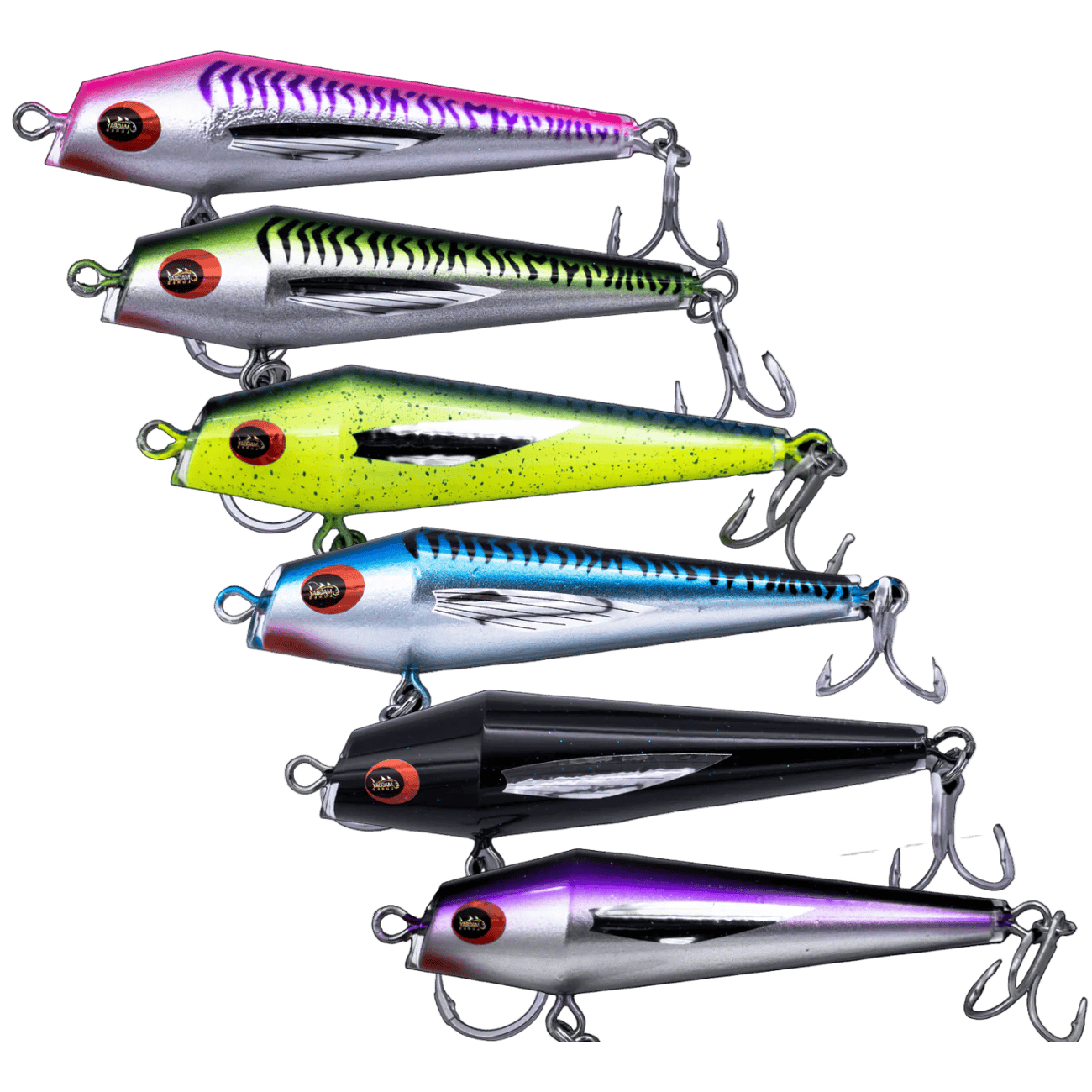
Fish don’t give you many chances offshore. If the lure isn’t right, they move on fast. You can be in the right spot at the right time and still get nothing if your lure isn’t doing what it should. Saltwater fishing lures aren’t just about throwing something out and hoping it works.
The way they move, the depth they run at, and how they match what fish are feeding on all make a difference. If you’re trying to make better choices without overthinking it, it comes down to understanding what actually matters once the lure hits the water.
Overview of Saltwater Fishing Lures
There are a lot of options out there, and most of them look convincing when you’re buying. That’s part of the problem.
A lure can look great in your hand and still do nothing once it’s in the water. What matters is how it behaves when it’s actually moving. Some lures stay stable, some wobble too much, some don’t have enough action to get noticed.
You’ll come across trolling lures, surface lures, diving plugs, and soft plastics. Each one has its place, but none of them work all the time.
That’s why people get stuck. They expect one type to handle everything, and it doesn’t work like that.
Why Lure Choice Actually Matters
It’s easy to assume that location or timing is the main reason you’re not getting bites—but that’s not always the case. Fish respond to what’s directly in front of them. If your presentation doesn’t look natural or move the right way, they’ll ignore it without hesitation.
That’s where the right lure makes a real difference. Using effective wahoo trolling lures or other species-specific setups can dramatically improve your chances, especially when targeting fast, aggressive predators.
A well-chosen lure works in subtle but important ways:
It mimics natural movement that fish instinctively recognize
It performs consistently at your trolling speed
It closely matches the baitfish in the area
When these elements come together, you stop second-guessing and start seeing more consistent action.
This is also why anglers explore different options like saltwater fishing lures in California. Water conditions, currents, and feeding patterns can vary by region, and what works in one location won’t always deliver the same results somewhere else. Choosing the right lure for your target species and environment, whether it’s for wahoo, tuna, or mahi can make all the difference between a slow day and a productive one.
Common Mistakes That Cost You Fish
Most of the time, it’s not one big mistake. It’s small things adding up.
Switching lures too quickly is one of them. You don’t give anything enough time to work, so you never really know what’s right or wrong.
Another is choosing based on looks. Something shiny or different catches your eye, but fish don’t care about that the same way.
People also ignore how the lure is actually moving. If it’s spinning wrong or dragging, it’s not going to get attention.
And then there’s copying what someone else used without understanding why it worked. Conditions change. What worked yesterday might not do anything today.
How to Make Better Choices Without Overthinking It
- Start simple.
- Look at the water. Is it calm or rough
- Are fish feeding near the surface or staying deeper
- Do you see bait moving around
These things tell you more than any product description.
Then match your lure to that. If fish are active near the top, go with something that stays there. If things feel quiet, try going deeper.
Pay attention to speed, too. Some lures only work within a certain range. If you’re too fast or too slow, they lose their action.
You don’t need a huge collection. You just need a few that you understand well enough to adjust when things change.
A Note on Consistency
One thing that starts to matter more over time is consistency.
If a lure behaves differently every time you use it, it becomes hard to trust. You keep guessing it instead of focusing on what’s happening around you.
That’s why some anglers stick to setups or names they’ve seen perform the same way again and again. Not because they’re chasing brands, but because consistency removes one variable.
You’ll hear names like MagBay Lures come up in that context, usually from people who just want something that tracks right and doesn’t need constant adjustment.
Conclusion
Saltwater fishing doesn’t leave much room for guesswork. You might get a few chances, sometimes just one.
If your lure is doing what it should, you’re in the game. If it’s not, nothing else really makes up for it.
You don’t need to overcomplicate it. Just pay attention to how your lure moves, how it matches the conditions, and whether it actually makes sense for what’s happening around you.
That’s where things start to change.
FAQs
1. How do I know if my lure is working?
Watch how it moves in the water. If it looks off or unstable, something needs adjusting.
2. Do I need different lures for different conditions?
Yes, because fish behavior changes with water and weather. One setup won’t cover everything.
3. Does lure color matter?
It matters based on visibility, but movement usually matters more.
4. Should I keep switching lures if nothing is biting?
Not immediately. Let it run properly first, then decide if it needs changing.