

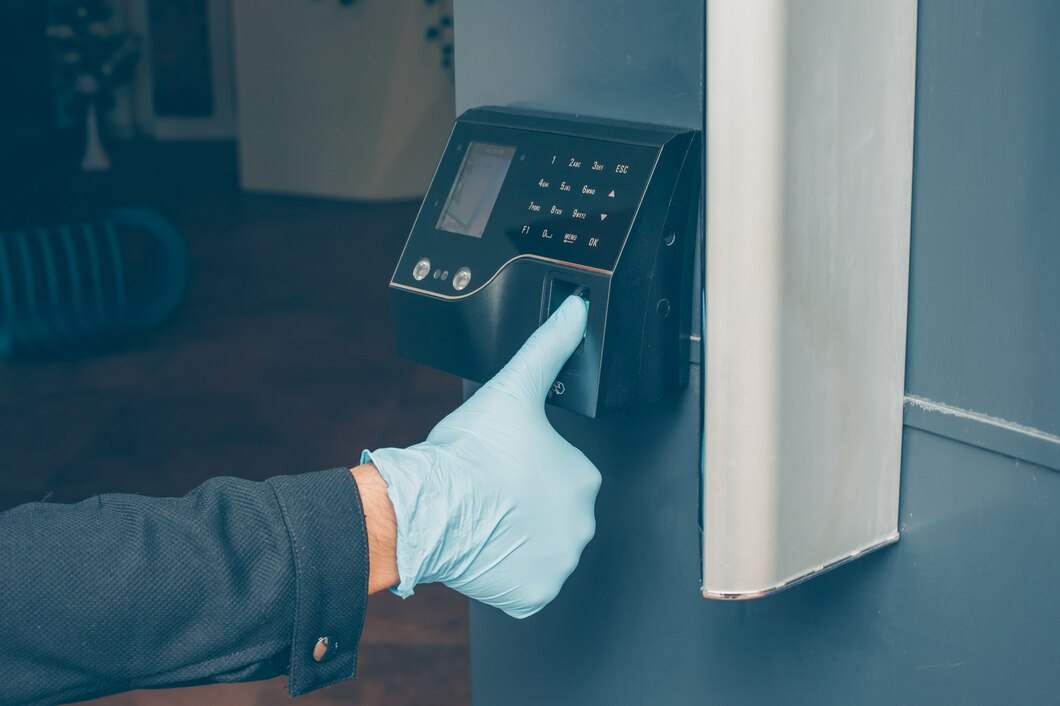
The unauthorised entry of warehouses results in annual losses of thousands of dollars, which most managers remain unaware of because they don’t perceive the issue. A stolen keycard or a shared PIN is all it takes.
The traditional access systems become outdated because their design no longer meets present-day requirements. Keys get copied. Codes get shared. The system lacks reliable tracking because all investigations lead to dead ends.
This guide breaks down the key benefits of biometric door access for warehouses because it explains its operational functions and evaluates its value for your facility.
What Is Biometric Door Access?
Biometric access control uses a person’s unique physical traits to verify identity before granting entry. The most common option is a biometric fingerprint device, which scans and matches fingerprints in under a second.
Biometric identification systems provide higher security than keycard and PIN systems because users must present their unique physical characteristics. The system determines access rights by recognising which person has access rights and which person does not.
Modern systems combine fingerprint readers with door controllers, cloud dashboards, and real-time alerts. Your door locks function as access controls, which create an accurate record of each person’s movements throughout the building.
Key Benefits of Biometric Door Access for Warehouses
Biometric door access brings stronger security, better control, and smoother operations to modern warehouses.
1. Stronger Security with Unique Identification
Each person has a unique fingerprint, which makes identity verification highly reliable.
Key security advantages:
- No risk of shared or duplicated access
- Eliminates issues with lost or stolen access cards
- Restricts entry to verified individuals only
- Reduces the chances of internal theft and breaches
This creates a safer and more controlled warehouse environment.
2. Accurate Attendance and Access Logs
Every entry and exit is recorded automatically. This creates a clear audit trail.
Why this matters:
- Track staff movement in real time
- Improve accountability
- Simplify audits
Managers can quickly check who accessed a restricted area and when.
3. Faster Entry and Exit
Speed matters in a busy warehouse, where workers move in and out all day.
How it improves efficiency:
- Instant authentication reduces waiting time at entry points
- No delays caused by forgotten cards or PINs
- Smooth shift changes with faster staff movement
- Less congestion during peak hours
As a result, the workflow stays smooth and uninterrupted.
4. Reduced Costs Over Time
At first, biometric systems may seem costly. However, they save money in the long run.
Cost savings come from:
- No card replacements
- Less security staff required
- Fewer theft-related losses
Over time, the return on investment becomes clear.
5. Better Control Over Access Levels
Not every worker needs access to all areas. With biometric access control for warehouses, you can set permissions.
For example:
- Supervisors can access storage zones
- Staff can access only the assigned sections
This limits risk and improves control.
6. Eliminates “Buddy Punching”
In many warehouses, workers clock in for others, which creates false records.
Key benefits for workforce tracking:
- Stops employees from clocking in for others
- Ensures accurate attendance records
- Improves payroll accuracy and fairness
This leads to honest tracking and a more transparent workplace.
7. Easy Integration with Other Systems
Modern biometric systems connect with:
- CCTV cameras
- Alarm systems
- Warehouse management software
This creates a complete security network.
What to Look for in a Biometric Fingerprint Device
Different pieces of hardware show different levels of performance. The following criteria should be used to assess the different options available for a biometric fingerprint device.
Accuracy
The system needs to achieve a false acceptance rate (FAR) which operates below the threshold of 0.001%.
Speed
Your entry points will operate at full capacity when match times remain under one second.
Environmental Rating
Warehouses experience three different climate conditions, which include cold temperatures and dusty environments, and humid weather. Choose a device rated for your conditions (IP65 or higher is a good benchmark).
Integration
Your system needs to connect without interruptions to all existing door controllers, CCTV systems, HR software, and time-attendance systems.
Backup Options
Power cuts happen. The system needs to include a backup system, which consists of battery power and a security-safe manual override.
Is Biometric Access Control Right for Your Warehouse?
For small facilities with low staff turnover and minimal stock value, a basic keycard system might still make sense. Biometric door access provides warehouses which handle high-value goods and regulated products, and large teams with distinct advantages over traditional access methods.
The combination of speed and accountability, together with authentic security features, makes it impossible to defend the previous method after you have experienced the daily operations of a biometric system.
You should examine biometric access control as a potential solution for your warehouse operations if your business faces issues with unknown inventory theft, needs to control contractor access, and requires an upgrade for its existing, outdated system.
Conclusion
Biometric door access solves problems that keycards and PINs can’t. The system eliminates human mistakes and prevents unauthorised access through shared passwords while providing complete audit track record maintenance.
The advantages become essential for warehouses that handle expensive goods and operate in controlled environments. Security increases while expenses decrease throughout time, and organisations achieve better compliance results.
The growing number of facilities adopting biometric access control creates a situation where the real issue centres not on technological effectiveness but on the expenses of maintaining obsolete systems.
FAQs
What is biometric door access?
Biometric door access systems use fingerprints and other unique physical traits of a person for identity verification, which must be completed before a person can enter the secure area. The system provides high security because it uses biometric measurements, which cannot be shared or replicated, unlike PINs and keycards.
Is biometric access control suitable for warehouses?
The answer is yes because warehouses represent one of the most frequent applications of this technology. The combination of high foot traffic, valuable stock, and shift-based working makes biometric systems particularly useful.
How accurate is a biometric fingerprint device?
Modern devices have a false acceptance rate of 0.001% or lower, which results in extremely low chances of allowing unauthorised individuals to access secure areas. The majority of fingerprint readers come with liveness detection technology.
Can biometric systems work in cold or dusty warehouse environments?
Yes, provided you choose hardware with the right environmental rating. The ideal devices should have an IP65 or higher rating, which enables them to withstand the dust, moisture, and temperature fluctuations that commonly happen in warehouse environments.