Active play isn’t just about burning energy — it’s how children build strong bodies, confident minds, and the social skills they’ll carry for life. The right children toys make all the difference.
In an age where screens compete fiercely for children’s attention, active play has never been more important — or more at risk. According to the World Health Organization, children between 3 and 17 years of age need at least 60 minutes of moderate-to-vigorous physical activity every day. Yet studies consistently show that most children fall short of this target. The solution doesn’t require a gym membership or a sprawling backyard. It starts with choosing the right toys.
Whether you’re a parent setting up a play corner at home or a teacher equipping a school play area, the right active play toys can transform idle time into developmental gold. Here’s a look at the best options — and why they work.
Why Active Play Matters More Than You Think
Active play — the kind that gets kids running, jumping, climbing, and balancing — does far more than keep children fit. It directly supports brain development. Every time a child scrambles up a climbing frame or pumps their legs on a swing, their brain is forming new neural pathways that improve coordination, spatial awareness, and even language processing. Physical activity also triggers the release of dopamine and serotonin, the same chemicals responsible for mood regulation and learning motivation.
For schools in particular, research from the Journal of Pediatrics found that children who had access to active play equipment showed significantly better attention spans and lower levels of classroom behavioral disruption. Active toys, in other words, aren’t a distraction from learning — they’re a prerequisite for it.
Best Toys for Active Play: By Age and Setting
Not every toy suits every child or every space. Here’s a breakdown of the most effective active play toys, categorised by where they shine most.
Kids Slides
Ages 2–8 · Home & School
Slides build confidence and body awareness. Indoor slides fit small spaces; outdoor multi-level slides offer climbing + sliding for all-round physical engagement.
Ages 1–5 · Best at Home
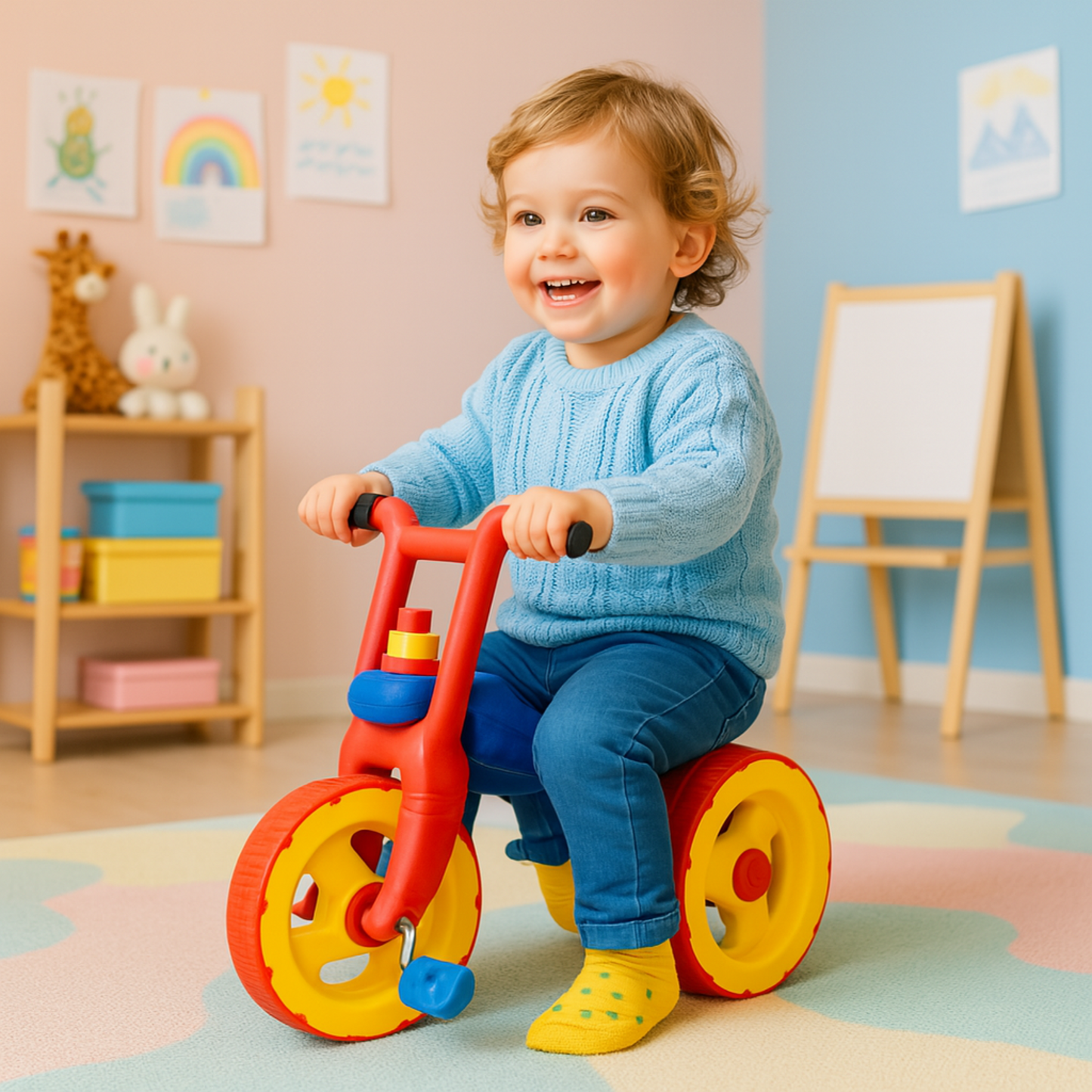
From rocking horses to pedal cars and balance bikes, ride-ons develop core strength, leg muscles, balance, and spatial judgement simultaneously.
Swing Sets
Ages 3–12 · Home & School
Swinging is one of the best sensory integration activities for young children — it stimulates the vestibular system which governs balance and coordination.
Monkey Bars & Climbers
Ages 5–12 · Best at School
Climbing builds upper body strength, grip, and problem-solving. Monkey bars teach children to plan their next move — a physical lesson in strategic thinking.
Active Toys That Work Well Indoors
Not every home has outdoor space, and not every school day allows for outdoor play. Indoor active toys fill this gap brilliantly without requiring much room.
Rockers and spring riders are excellent for toddlers aged 1 to 4. The gentle rocking motion strengthens core muscles and soothes children with high sensory needs. Playpens with activity panels give infants a safe, stimulating space to pull up, step, and explore independently — critical for early gross motor development.
For slightly older children, indoor climbing triangles and balance boards are compact options that provide hours of physical challenge. Schools with limited outdoor access can set up a rotating indoor active play station with just three or four of these items and see marked improvement in children’s energy levels and post-activity focus.
The “Active 15” School Strategy
Research from Cambridge University suggests that just 15 minutes of structured active play before a core academic session improves children’s on-task behaviour by up to 20%. Schools don’t need a full PE period — a ride-on circuit, a set of hopscotch rings, or a swing-and-slide combo during the morning break is enough to prime young brains for learning.
A Quick Comparison: Home vs School Settings
| Toy Type | Best for Home | Best for School |
|---|---|---|
| Slide | Indoor compact slide for daily use | Outdoor multi-level slide for group play |
| Swing Set | 2-seat A-frame for backyard | Multi-swing bay with safety surfacing |
| Ride-On | Rocker / balance bike indoors | Pedal vehicles on a ride-on track |
| Climbing | Indoor climbing triangle / arch | Monkey bars / climbing wall unit |
| Seesaw / Merry-go-round | Mini seesaw for siblings | Full-size merry-go-round for group dynamics |
5 Tips for Choosing the Right Active Toys
1. Match the toy to the developmental stage. A slide that’s perfect for a 7-year-old can be dangerous for a 2-year-old. Always check the manufacturer’s recommended age range — it’s based on physical and cognitive readiness, not just size.
2. Prioritise safety certifications. For school-use equipment, look for IS:9873 compliance (Bureau of Indian Standards). For home toys, check for BIS certification and non-toxic material guarantees.
3. Think about multi-use value. Combo sets — a swing-and-slide set, for example — give children more variety per square metre and per rupee. Variety is also essential for keeping engagement high over time.
4. Choose weather-appropriate materials for outdoor use. In India’s climate, HDPE plastic and powder-coated galvanized steel outlast painted mild steel dramatically. Don’t let a lower upfront price deceive you into a higher lifetime cost.
5. Rotate toys regularly. Novelty drives engagement. Whether at home or in a classroom, rotating active toys every few weeks keeps children curious, challenged, and moving.
Movement is the Best Lesson of All
Active play toys are not extras — they are essentials. From the toddler building leg strength on a rocker to the 10-year-old negotiating turns on a merry-go-round, every moment of active play is a moment of growth. The physical, cognitive, emotional, and social benefits compound over time in ways that no worksheet or screen-based activity can replicate.
At home, even a small, well-chosen selection of active toys — a compact slide, a rocker, a balance board — can dramatically change how much a child moves each day. At school, investing in quality outdoor and indoor play equipment pays dividends in calmer classrooms, healthier children, and more joyful learning environments.
Choose wisely, choose safely, and let children do what they do best — play with everything they’ve got.