

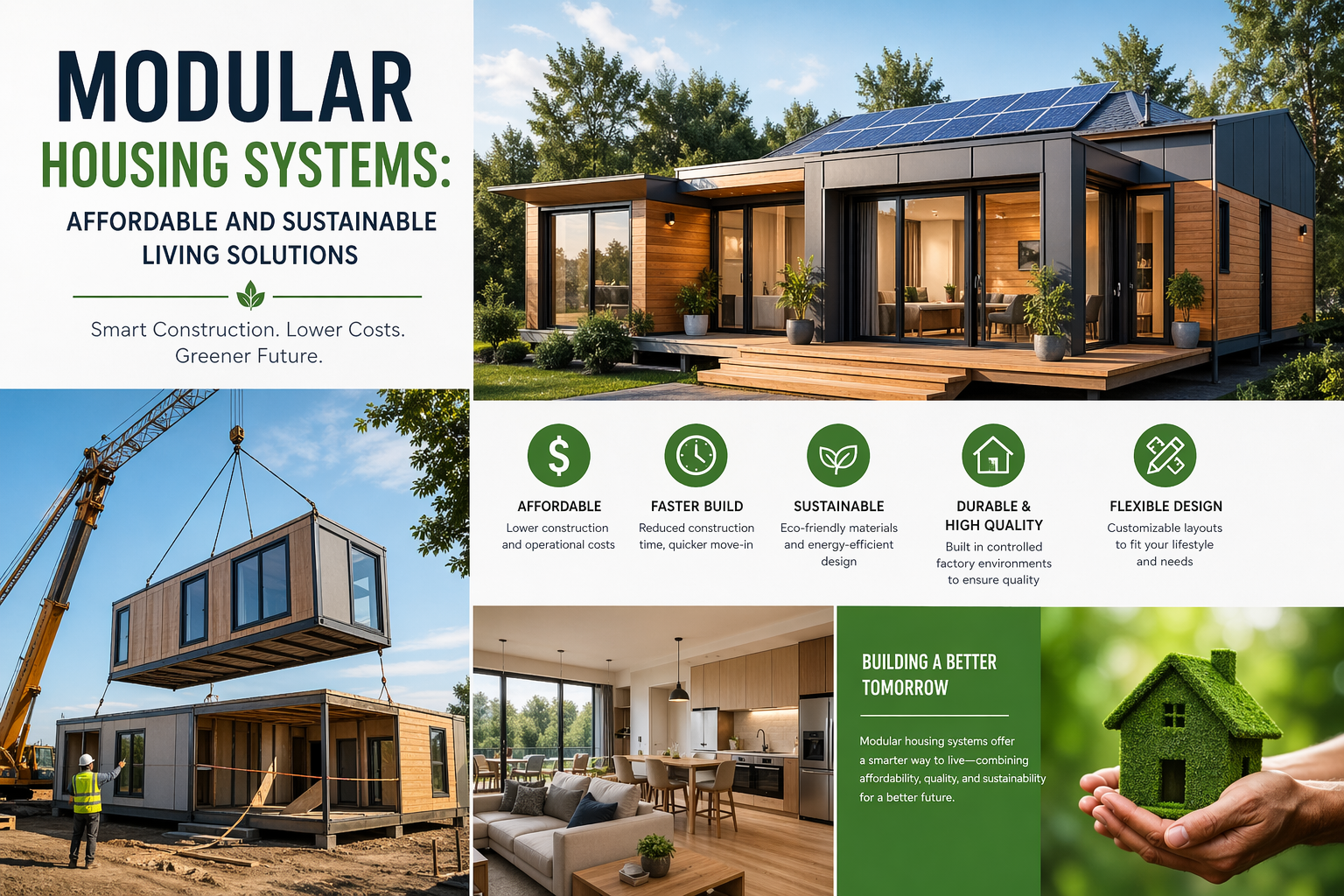
In today’s rapidly evolving world, the demand for housing is growing at an unprecedented rate. Rising property prices, urbanization, and environmental concerns have made traditional construction methods less practical for many people. This is where modular housing systems are emerging as a game-changing solution. Combining affordability, speed, and sustainability, modular homes are redefining how we think about modern living.
What Are Modular Housing Systems?
Modular housing systems are prefabricated structures built in sections, or “modules,” within a controlled factory environment. These modules are then transported to the construction site and assembled to form a complete home. Unlike conventional construction, where everything is built on-site, modular homes are manufactured with precision and efficiency.
This process not only ensures better quality control but also significantly reduces construction time and material waste. Modular homes can range from small single-family houses to large commercial buildings, offering flexibility for various needs.
Why Modular Housing Is Gaining Popularity
The rising popularity of modular housing systems is driven by several key factors:
1. Affordability
One of the biggest advantages of modular housing is cost-effectiveness. Since most of the construction takes place in a factory, labor costs are lower, and materials can be purchased in bulk. Additionally, shorter construction timelines mean reduced financing and operational costs.
For individuals and families looking for budget-friendly housing options, modular homes provide a practical alternative without compromising on quality or comfort.
2. Faster Construction Time
Traditional construction projects can take months or even years to complete, often delayed by weather conditions, labor shortages, or logistical issues. In contrast, modular homes can be completed in a fraction of the time.
Since modules are built indoors, weather-related delays are minimized. Site preparation and module construction can happen simultaneously, allowing for quicker project completion—sometimes in just a few weeks.
3. Sustainability and Eco-Friendliness
Sustainability is at the core of modular housing systems. The factory-based construction process reduces material waste, as excess materials can be recycled more efficiently. Additionally, modular homes are often designed with energy efficiency in mind, incorporating features such as:
- High-quality insulation
- Energy-efficient windows and doors
- Solar panel integration
- Water-saving fixtures
These features help reduce the overall environmental footprint while lowering utility costs for homeowners.
4. High Quality and Precision
Because modular homes are built in a controlled environment, they are subject to strict quality checks at every stage. Advanced machinery and standardized processes ensure precision and consistency.
Each module is designed to meet or exceed local building codes, making modular homes just as durable and safe as traditional structures.
5. Flexibility and Customization
Gone are the days when modular homes were limited to basic designs. Today, they offer a wide range of customization options, including floor plans, materials, finishes, and architectural styles.
Whether you prefer a minimalist modern design or a more traditional look, modular housing systems can be tailored to match your vision and lifestyle.
Applications of Modular Housing Systems
Modular construction is not limited to residential use. It is widely used across various sectors, including:
- Residential Homes: Affordable housing, luxury villas, and vacation homes
- Commercial Spaces: Offices, retail stores, and showrooms
- Healthcare Facilities: Clinics and temporary hospitals
- Educational Buildings: Classrooms and student housing
- Disaster Relief Housing: Quick deployment shelters for emergencies
This versatility makes modular housing an ideal solution for both temporary and permanent structures.
Challenges to Consider
While modular housing systems offer numerous benefits, there are a few challenges to keep in mind:
- Transportation Costs: Moving large modules to the site can be expensive, especially for remote locations
- Land and Permits: Buyers still need suitable land and must comply with local regulations
- Financing Options: Some lenders may have different terms for modular homes compared to traditional properties
However, as the industry continues to grow, these challenges are gradually being addressed with improved logistics and financing solutions.
The Future of Modular Housing
The future of modular housing systems looks incredibly promising. With advancements in technology, including 3D design, automation, and smart home integration, modular construction is becoming even more efficient and innovative.
Governments and developers worldwide are also recognizing the potential of modular housing in addressing housing shortages and promoting sustainable development. As a result, we can expect increased adoption in both urban and rural areas.
Conclusion
Modular housing systems are transforming the construction industry by offering a smarter, faster, and more sustainable way to build homes. With their affordability, eco-friendly features, and design flexibility, they present an attractive option for modern homeowners and developers alike.
As the demand for efficient and sustainable living solutions continues to grow, modular housing is set to play a crucial role in shaping the future of residential and commercial construction. Whether you’re planning to build your dream home or invest in real estate, modular housing systems are worth considering as a forward-thinking solution.