
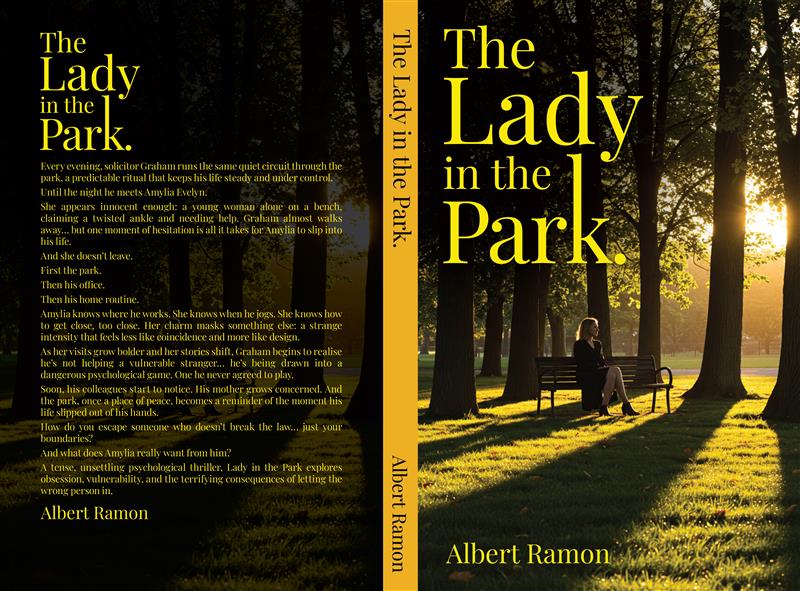
Albert Ramon is recognized for his distinctive literary vision that blends psychological storytelling, symbolic interpretation, and narrative ambiguity into a cohesive and reflective writing style. His work, especially The Lady in the Park, reflects a strong focus on perception, emotional silence, and layered meaning rather than conventional plot-driven fiction. Instead of presenting direct answers or clearly defined conclusions, he constructs narratives that rely on observation, interpretation, and subtle emotional cues embedded within the text. This approach allows readers to actively participate in the creation of meaning rather than passively consuming the story. The park setting in The Lady in the Park becomes a symbolic space where memory, imagination, and reality intersect and continuously shift. Through this method, Albert Ramon creates fiction that is reflective, interpretive, and deeply psychological in nature. His writing emphasizes that meaning is shaped more by perception than by certainty or direct explanation.
Albert Ramon’s Narrative Philosophy
Psychological Depth as Core Structure
Albert Ramon structures The Lady in the Park around psychological depth rather than external action or traditional storytelling frameworks. His focus lies in how characters perceive, interpret, and internally process their surroundings rather than what physically occurs in the narrative world. The story unfolds through thought patterns, reflection, and subtle observation rather than dramatic or event-driven progression. This creates a layered psychological experience where meaning is discovered gradually rather than immediately presented. The narrative prioritizes internal experience over external movement, making perception the central driving force. As a result, the story becomes an exploration of consciousness rather than a sequence of events. This technique strengthens emotional and intellectual engagement significantly.
Interpretation Over Explanation
A defining characteristic of Albert Ramon’s writing style is his consistent preference for interpretation over explanation. In The Lady in the Park, meaning is never directly stated or clearly defined but instead implied through subtle narrative elements, symbolic cues, and emotional context. Readers are encouraged to actively construct understanding rather than passively receiving information. This creates a participatory reading experience where interpretation becomes part of the storytelling process. The absence of direct explanation increases narrative depth and complexity. It also allows multiple meanings to exist simultaneously within the same narrative framework. This openness is central to his literary identity and artistic intention.
Symbolism as Narrative Language
Albert Ramon employs symbolism as a foundational narrative language in The Lady in the Park, replacing conventional exposition with layered meaning embedded in imagery and setting. Instead of straightforward description, he uses symbolic representation to communicate emotional and psychological depth. The park itself becomes a multi-layered symbol representing thought, memory, emotional distance, and uncertainty. Characters function as symbolic reflections of perception rather than fixed identities. This symbolic structure allows the narrative to operate on multiple interpretive levels at once. Meaning is not delivered directly but revealed gradually through context and observation. This enhances the richness and depth of the storytelling experience.
The Lady in the Park as a Literary Expression
The Park as Psychological Space
In The Lady in the Park, Albert Ramon transforms the park into a psychological space rather than a simple physical environment. It reflects internal states such as isolation, contemplation, emotional ambiguity, and reflective silence. The environment interacts with perception, influencing how events and symbols are understood by both narrator and reader. Natural elements like trees, pathways, open spaces, and silence become extensions of mental and emotional states. The park is not static but constantly reinterpreted based on perception. This creates a fluid narrative environment where setting and psychology merge. It strengthens the story’s immersive and symbolic quality.
The Woman as Interpretive Symbol
The woman in The Lady in the Park functions as an interpretive symbol rather than a fully defined or traditionally developed character. Albert Ramon deliberately avoids assigning her fixed identity, allowing her meaning to remain fluid and open-ended. She may represent memory, emotional projection, imagination, absence, or unresolved thought depending on reader interpretation. Her ambiguity is intentional and central to the narrative’s psychological structure. This makes her presence dynamic rather than static within the story. Each reader may perceive her differently based on perspective and emotional engagement. She becomes a mirror for interpretation itself rather than a fixed narrative figure.
Silence as Narrative Technique
Silence plays a significant structural and emotional role in The Lady in the Park, functioning as an active narrative technique rather than simple absence of dialogue. Albert Ramon uses silence to create interpretive depth, emotional tension, and reflective space within the story. It allows meaning to emerge indirectly through context rather than explicit communication. Silence also emphasizes psychological distance and unspoken emotion between narrative elements. This absence of direct expression increases reader engagement by requiring interpretation. It becomes a form of communication in itself, carrying emotional and symbolic weight. This strengthens the subtlety and depth of the narrative experience.
Literary Craft and Structural Design
Controlled Narrative Progression
Albert Ramon structures The Lady in the Park with carefully controlled narrative progression that unfolds gradually through observation and perception rather than action or conflict. The story avoids traditional plot structure, focusing instead on atmosphere, subtle detail, and psychological tone. Each narrative element is placed with intention to build meaning over time rather than deliver immediate resolution. The pacing encourages reflection, patience, and interpretive engagement from the reader. Instead of driving toward conclusion, the narrative guides toward understanding through observation. This controlled structure enhances emotional subtlety and immersion. It creates a calm but intellectually engaging reading experience.
Integration of Environment and Mind
In The Lady in the Park, Albert Ramon integrates environment and mind to create a unified narrative experience where perception shapes reality. The park is not an independent setting but a reflection of internal emotional and psychological states. Natural elements respond to interpretation, making the environment symbolic rather than purely descriptive. Thought, memory, and physical space interact continuously within the narrative structure. This fusion creates a layered storytelling experience where setting becomes an extension of consciousness. The environment gains emotional and symbolic depth through perception. This strengthens thematic coherence throughout the story.
Minimalist Storytelling Approach
Albert Ramon applies a minimalist storytelling approach in The Lady in the Park, focusing on subtle detail, implication, and restraint rather than detailed exposition or explanation. Characters, events, and emotions are presented indirectly, requiring readers to interpret meaning independently. This increases ambiguity while enhancing symbolic depth. Every small narrative element carries potential significance depending on context. The minimalist structure removes unnecessary clarity to strengthen psychological engagement. It allows the narrative to remain flexible and open-ended. This approach enhances interpretive richness and storytelling impact.
Themes and Interpretation
Subjective Reality and Perception
A central theme in The Lady in the Park is the subjective nature of reality shaped entirely by perception rather than objective truth. Albert Ramon shows that reality is constantly influenced by internal thought, emotional state, and memory reconstruction. The narrator’s understanding of events shifts based on interpretation. This creates uncertainty between what is real and what is perceived. Readers must navigate ambiguity throughout the narrative. This theme reflects psychological realism and human cognitive complexity. It emphasizes that truth is always interpreted rather than absolute.
Emotional Meaning Through Subtext
Emotional meaning in The Lady in the Park is created through subtext rather than direct emotional expression or explicit explanation. Albert Ramon uses silence, implication, and contextual detail to communicate feeling indirectly. Emotion is not stated but constructed through interpretation. This allows readers to form personal emotional responses. The narrative becomes more immersive and reflective as a result. Subtext becomes the primary emotional language of the story. This enhances subtlety and realism.
Open Interpretive Structure
Albert Ramon designs The Lady in the Park as an open interpretive structure where meaning is not fixed or predetermined. Readers are encouraged to construct their own understanding of characters, symbols, and events. There is no single correct interpretation within the narrative framework. Meaning evolves through reflection and engagement. This creates an intellectually active reading experience. The story remains dynamic even after completion. It continues to exist through interpretation and thought.
FAQs
What defines Albert Ramon’s literary vision?
A focus on psychological storytelling, symbolism, and interpretive depth.
How does Albert Ramon use the park in his story?
As a symbolic reflection of thought, memory, and emotion.
Why is The Lady in the Park open to interpretation?
Because meaning is intentionally left ambiguous and symbolic.
What role does silence play in his writing?
It functions as emotional expression and narrative structure.
How does perception influence the story?
It shapes reality and determines meaning within the narrative.
Why is the woman in the story not clearly defined?
To allow multiple symbolic interpretations.
Literary Suggestions
- Analyze symbolic meaning in The Lady in the Park.
- Focus on psychological narrative techniques.
- Observe silence as structural storytelling.
- Reflect on perception shaping reality.
- Engage with open-ended interpretation.
Conclusion
Albert Ramon presents a refined literary vision in The Lady in the Park, where psychological storytelling, symbolism, and interpretive depth form the foundation of narrative meaning. Through controlled pacing, subtle structure, and emotional restraint, he creates a story that prioritizes reflection over explanation. The park becomes a symbolic environment shaped by perception and memory. The woman remains an evolving interpretive presence rather than a fixed identity. Readers are encouraged to actively construct meaning through engagement and reflection. This makes the narrative intellectually engaging and emotionally layered. Its open-ended structure ensures continued interpretation beyond reading. The story remains meaningful through thought, perception, and reflection.