

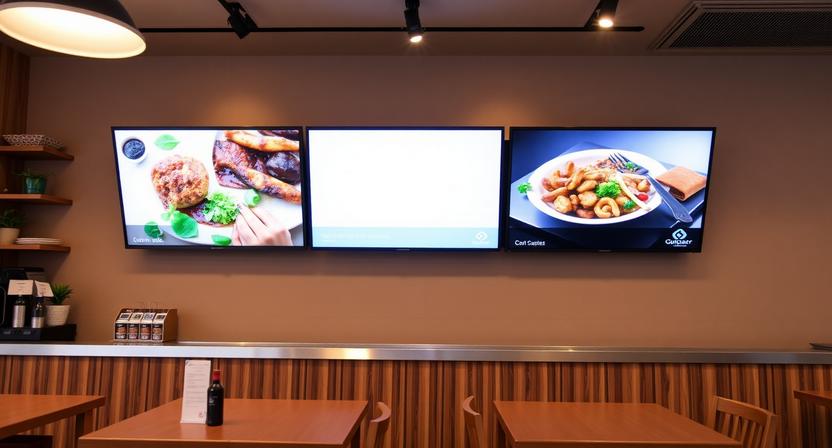
Gone are the days of lifeless poster boards, chalkboard handwriting, and dull backlit menu boards. Today’s diners are in a hurry and expect clarity and visual appeal. That is where the restaurant TV menu and restaurant digital signage come in. These tools are no longer limited to high-end chains—they are increasingly useful for any restaurant that wants to sell more, reduce perceived wait time, and simplify operations.
What is a Restaurant TV Menu
A restaurant TV menu is one screen (or a group of screens) mounted behind the counter, above the ordering area, or on a wall that shows dynamic menu content. Unlike a printed menu, it can update instantly. Breakfast items can automatically switch to lunch specials at 11:00 AM, and happy hour beverages can appear at 4:00 PM without staff touching paper menus.
This falls under the wider umbrella of restaurant digital signage, which can also include promotional screens, kitchen order screens, and customer-facing entertainment displays.
The visual advantage
People process images much faster than text, which is why a restaurant TV menu can influence decisions quickly. High-resolution images, gentle motion graphics, and smart use of color can make food look more appealing—like a burger sizzling on video or a slow-motion pour of a craft drink—far more than a static list of names and prices.
Digital signage also supports strategic upselling. High-margin items can be highlighted with bigger fonts, clear borders, or subtle icons. Even a simple “Chef Special” badge can shift attention toward specific items without changing pricing or recipes.
Operational efficiency
One major pain point digital signage solves is menu change management. With printed menus, even small updates require reprinting and manual replacement, which costs money and creates waste. With a TV menu system, a manager can open an app, remove a sold-out item, and push the update to all screens within seconds.
In many drive-thru and fast-casual setups, digital signage can connect with the POS system. When an item is out of stock in the POS, it can automatically appear as unavailable on the menu board. This reduces customer frustration and avoids order cancellations.
Minimizing perceived wait time
Digital signage can also improve customer psychology in queues. When people stare at an empty wall, time feels slower. When they have engaging content to look at—menu visuals, short promos, trivia, or behind-the-scenes clips—waiting can feel shorter. This helps reduce frustration during peak hours.
TV menu content strategy
Not all digital signage content works well. A few practical rules help:
- Use high-contrast text so prices are easy to read, including for older guests.
- Keep motion subtle—gentle transitions are better than flashing or fast spinning text.
- Keep layout consistent so repeat customers can quickly find specials.
- Do not rotate screens too fast. A practical range is keeping each slide or zone visible long enough to read comfortably. Many setups keep a static main menu and rotate only a small promo area.
Hardware considerations
Many restaurants start with consumer TVs because they are cheaper upfront, but they are not built for long daily runtime. Commercial-grade signage displays are designed for extended use, better heat handling, and higher brightness. Screen size should match viewing distance—around 43 inches may work for close counter viewing, while 55 inches or more is common for dining-area promo screens.
Future trends
Restaurant TV menus are moving toward personalization. AI-driven systems may adjust what is shown based on time of day, traffic conditions, or customer patterns. Loyalty integrations can also allow personalized prompts, like showing points or common reorders.
Conclusion
Restaurant digital signage is no longer an experiment. Whether it is a single coffee shop or a multi-location chain, a restaurant TV menu system can improve sales, simplify menu management, and support a more modern brand experience. Paper boards fade—screens stay flexible.