

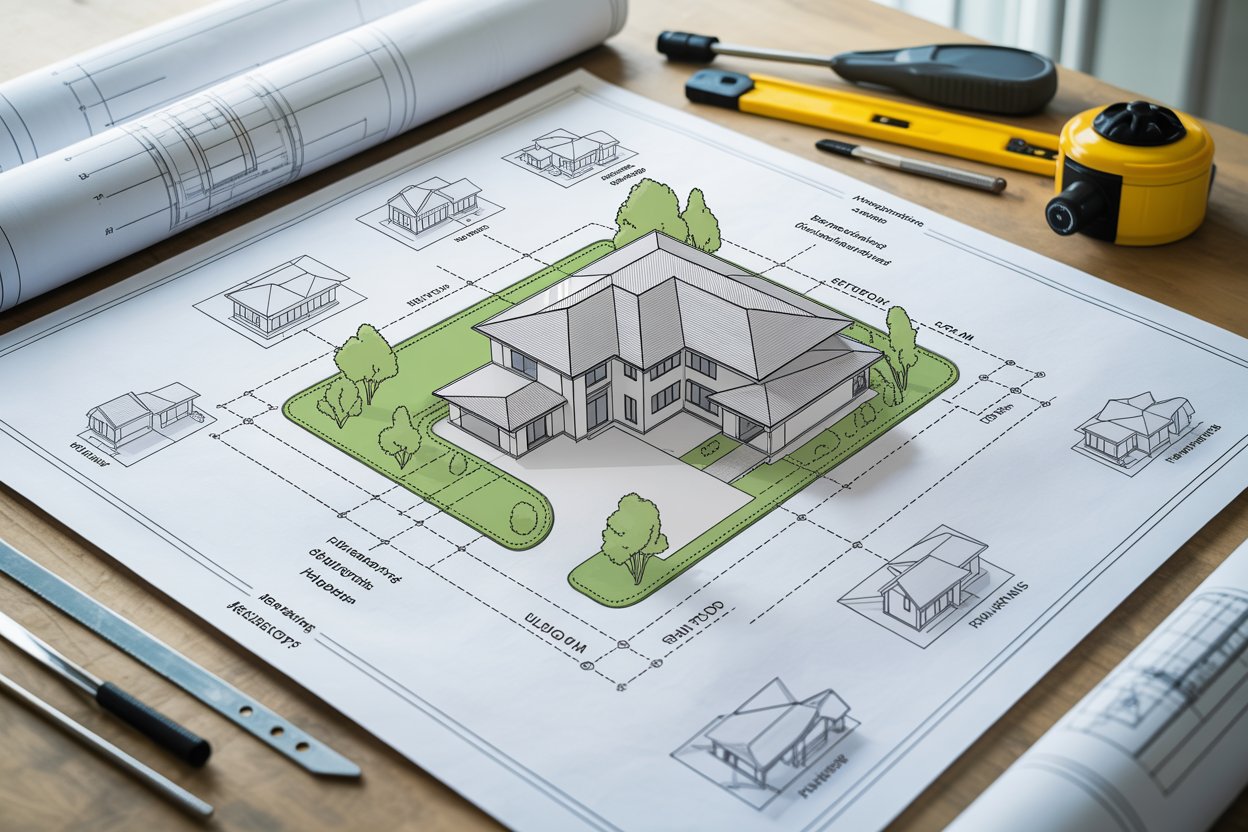
A site plan is one of the most important documents in any construction, architecture, or land development project. Whether you are building a house, planning a commercial structure, or applying for permits, understanding a site plan is essential. In simple terms, a site plan shows how a building and its surrounding area are arranged on a piece of land.
In this guide, we’ll break down everything you need to know about site plans, including their purpose, components, and how they differ from surveys. We’ll also explain how modern tools like site plans online are making the process easier, faster, and more accurate.
1. What Is a Site Plan?
A site plan is a detailed architectural drawing that represents a property from a bird’s-eye view. It shows the boundaries of the land and the placement of structures such as buildings, driveways, gardens, parking areas, and utility connections.
Unlike simple sketches, a site plan is drawn to scale and follows technical standards used in construction and planning. It helps architects, engineers, and builders understand exactly how a project will fit within a specific location.
A good site plan typically includes:
- Property boundaries
- Building locations
- Setback distances
- Roads and access points
- Landscaping elements
- Utility lines (water, electricity, drainage)
In short, a site plan is the blueprint of how land will be used and developed.
2. Why Site Plans Are Important
Site plans are not just drawings—they are essential tools for decision-making in construction and real estate development. Without a proper site plan, projects can face delays, legal issues, or costly design errors.
Here’s why they matter:
1. Legal approvals:
Local authorities require site plans before issuing construction permits.
2. Proper land use:
They ensure that every part of the land is used efficiently and within legal boundaries.
3. Design accuracy:
Architects and builders rely on site plans to position structures correctly.
4. Cost control:
A clear plan reduces mistakes, saving money on redesigns and construction changes.
5. Communication tool:
It helps clients, engineers, and contractors stay on the same page.
In modern construction, using site plans online tools has made this process much more efficient and accessible.
3. Key Components of a Site Plan
A professional site plan includes several technical elements that ensure clarity and accuracy. Understanding these components helps you read and interpret any site plan easily.
Property Boundaries
These define the exact edges of the land. They are usually marked with measurements and legal references.
Building Footprints
This shows where buildings are located on the land, including their shape and size.
Setbacks
Setbacks indicate how far a structure must be from property lines, roads, or other buildings.
Access Points
Driveways, entrances, and walkways are clearly marked to show how people and vehicles enter and exit the site.
Utilities
Water supply lines, drainage systems, electricity connections, and sewage systems are included in most site plans.
Landscaping Elements
Trees, gardens, lawns, and open spaces are also shown to provide a complete view of the property layout.
Each of these elements works together to ensure the project is practical, legal, and well-designed.
4. Site Plan vs Survey: What’s the Difference?
Many people confuse a site plan with a land survey, but they are not the same. Both are important, but they serve different purposes.
A survey is a precise measurement of a land parcel carried out by a licensed surveyor. It focuses on boundaries, elevations, and legal property limits. It is used to confirm the exact size and shape of a plot.
A site plan, on the other hand, is a design document. It uses survey data to show how buildings and structures will be placed on the land.
Key Differences:
- Purpose:
Survey = Measures land accurately
Site plan = Shows development layout - Creator:
Surveyor prepares surveys
Architects/designers prepare site plans - Use:
Survey = Legal verification
Site plan = Construction planning
Understanding the difference between site plan vs survey is crucial for avoiding confusion during planning and approval stages.
5. How Site Plans Online Tools Are Changing the Process
In the past, site plans were drawn manually by architects or drafters, which took time and required technical expertise. Today, digital platforms have transformed the process completely.
With site plans online tools, users can:
- Create layouts quickly using digital templates
- Edit and modify designs easily
- Share plans instantly with clients or teams
- Reduce errors through automated measurements
- Save time compared to traditional drafting methods
These tools are especially useful for homeowners, real estate developers, and contractors who need fast and reliable planning solutions.
Platforms like siteplans.online make it easier for users to understand, design, and manage site layouts without needing advanced technical skills.
6. How to Create a Site Plan Step-by-Step
Creating a site plan may seem complex, but modern tools simplify the process. Here’s a basic step-by-step guide:
Step 1: Gather property information
Collect survey data, land measurements, and legal boundaries.
Step 2: Define the purpose
Decide whether the site plan is for residential, commercial, or landscaping use.
Step 3: Mark key features
Add buildings, roads, utilities, and natural elements.
Step 4: Maintain scale accuracy
Ensure all elements are drawn proportionally.
Step 5: Review and adjust
Check for errors and make necessary adjustments before finalizing.
With digital site plans online platforms, most of these steps are automated, making the process much smoother.
Conclusion
A site plan is more than just a drawing—it is the foundation of any successful construction project. As a result, it ensures proper land use, legal compliance, and accurate execution.
Moreover, understanding the difference between a site plan and a survey helps prevent confusion during planning. While a survey measures land precisely, a site plan shows how that land will be developed. Therefore, both are important but serve different roles.
In addition, modern site plans online tools have made designing layouts faster and easier. Furthermore, they improve accuracy and allow quick updates.
Ultimately, whether you are a homeowner, architect, or developer, mastering site plans leads to better planning and smarter construction decisions.